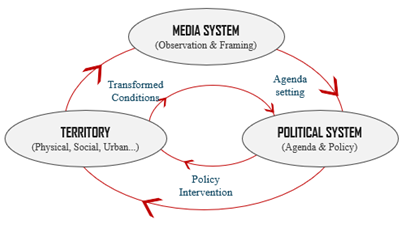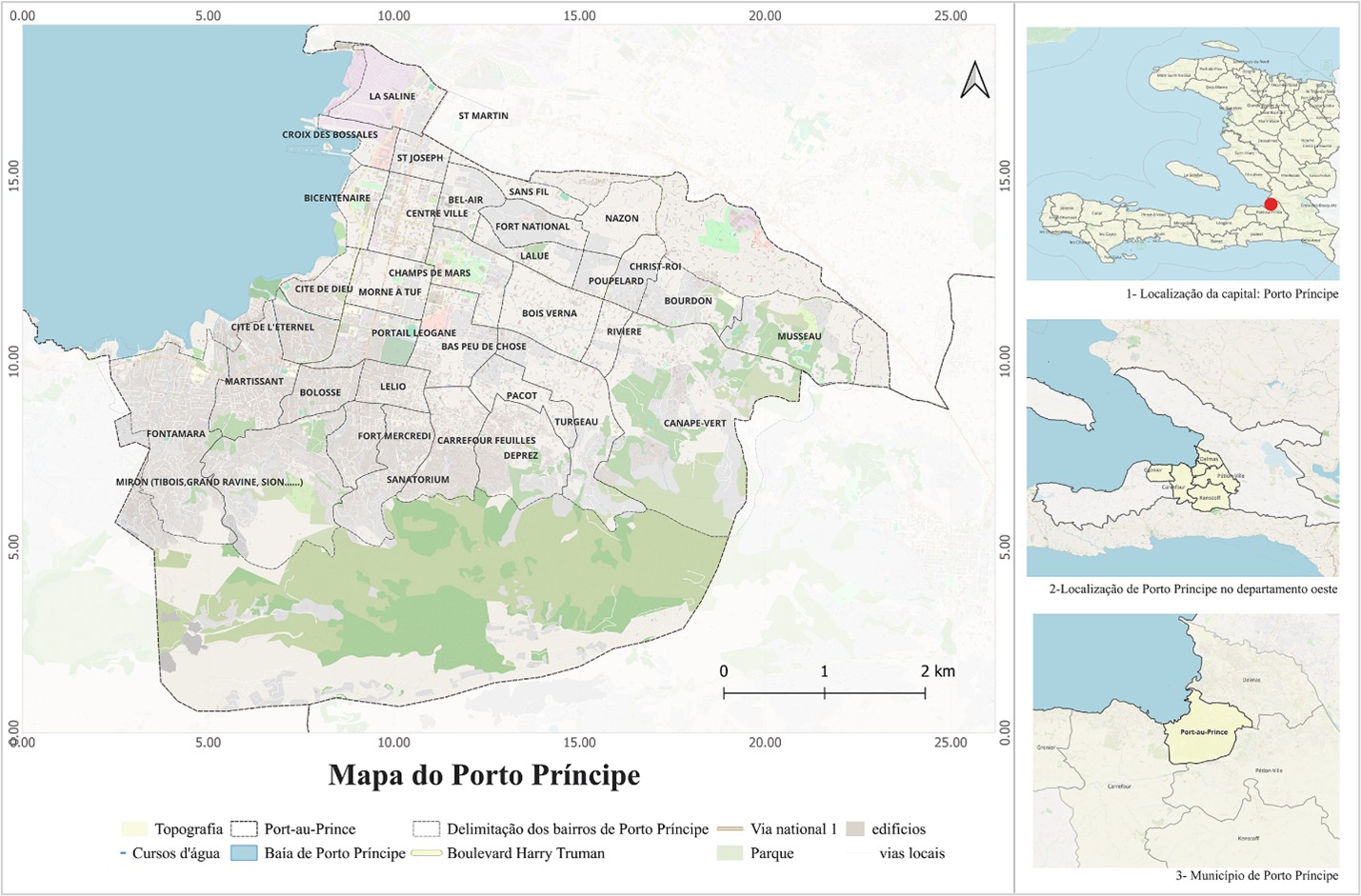
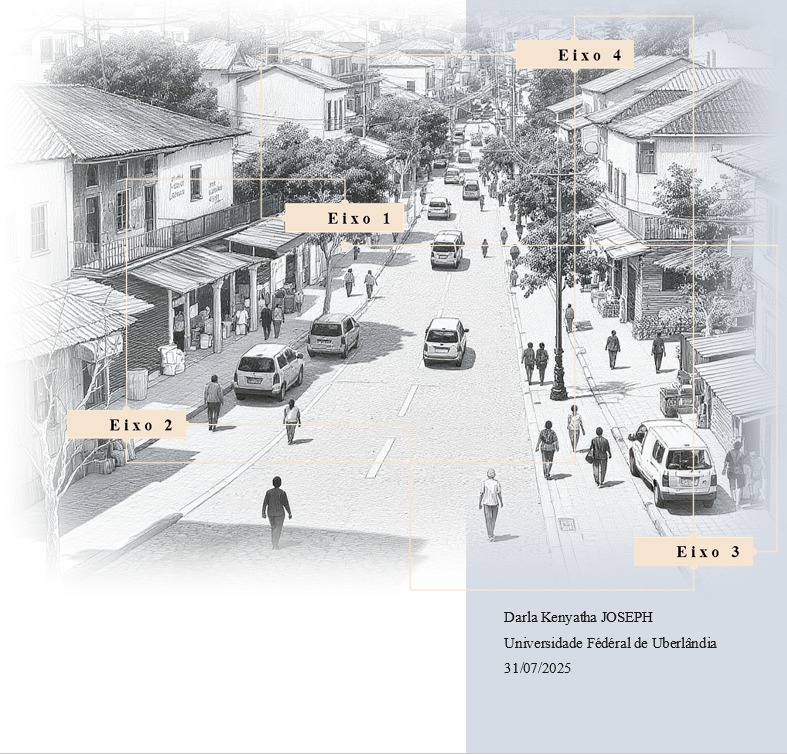
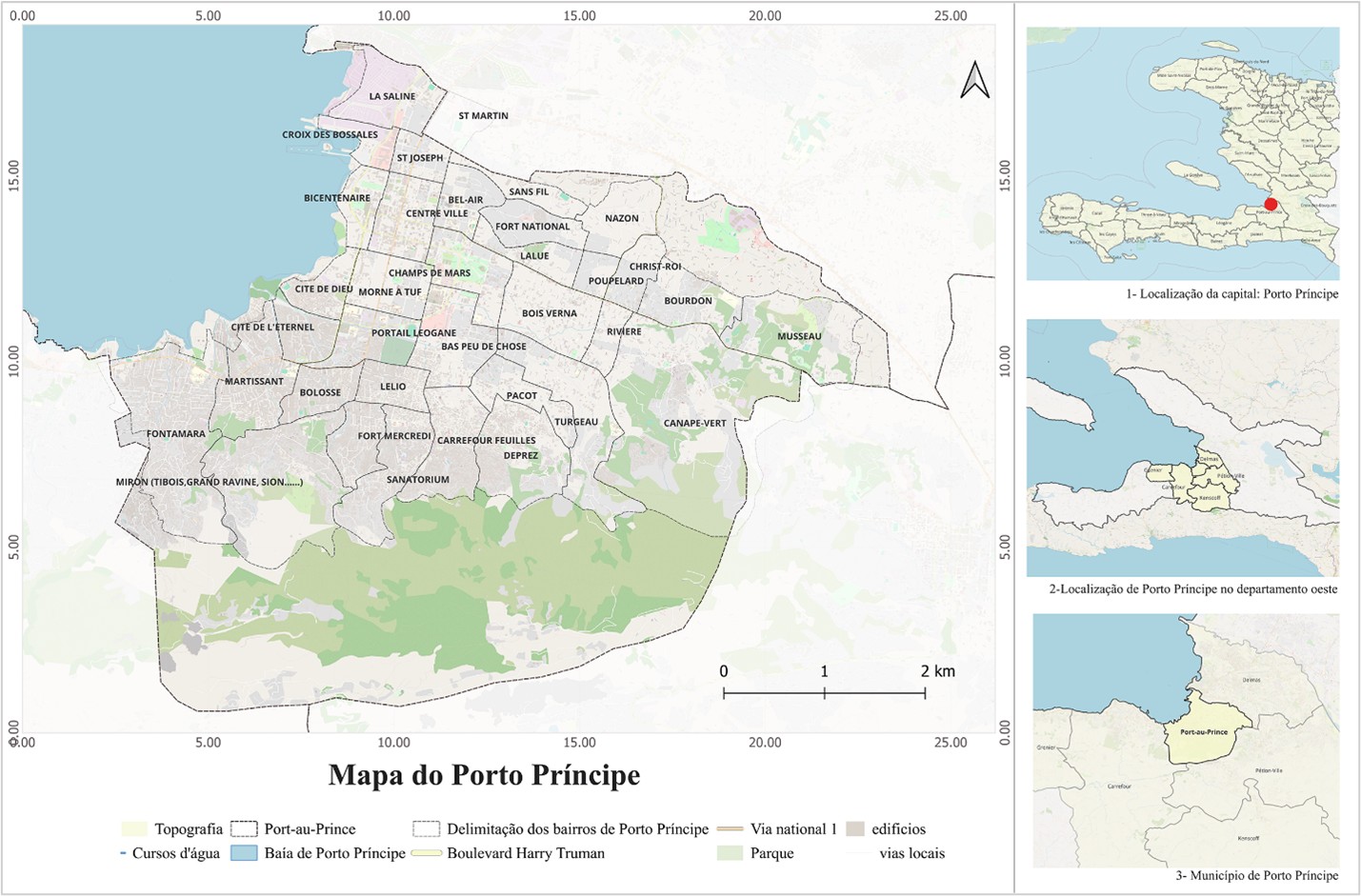
The urban reconstruction of Port-au-Prince after the 2010 earthquake has become a central topic on the agenda of Haitian and international institutions, in response to the need to reconfigure an urban space weakened by decades of inefficient urban management, disorderly urbanization and social crisis. This dissertation is part of the scope of the debate on post-catastrophe urban planning in contexts of structural vulnerability, with the objective of proposing strategic guidelines for urban reconstruction for Port-au-Prince, based on the critical adaptation of Latin American experiences. The main objective of this dissertation is to propose urban planning strategies adapted to the specificities of Port-au-Prince (Haiti), based on the critical analysis of Latin American experiences of urban transformation and considering the prolonged post-disaster context and local socio-spatial dynamics. To develop this objective, a qualitative and comparative methodology was adopted, structured in: (I) theoretical review on social urbanism, participatory urbanism and urban resilience; (II) comparative analysis of three Latin American case studies (Medellín, Favela-Bairro in Rio de Janeiro and Villa 31 in Buenos Aires); (III) systemic diagnosis of urban vulnerability in Port-au-Prince; (IV) strategic synthesis and elaboration of propositional guidelines. Among the specific objectives, the following stand out: the identification of the critical success factors of the projects analyzed; the assessment of Port-au-Prince's material, institutional and social vulnerabilities; and the formulation of a strategic urban planning framework adapted to the Haitian context. The results of the research indicate the need to overcome the reproduction of exogenous models, reaffirming the importance of contextualized adaptation of practices of social urbanism, participatory planning and promotion of urban resilience. It was found that the successful experiences of Medellín, Rio and Buenos Aires are partially applicable to Haiti, as long as they are adjusted to institutional constraints, the dynamics of self-construction and the local culture. In this sense, the dissertation proposes a matrix to evaluate the transferability of urban public policies, allowing the careful selection of strategies compatible with the Haitian realities. As a response, four strategic axes were defined for the reconstruction of Port-au-Prince: (I) decentralized and collaborative territorial governance; (II) spatial justice and reduction of inequalities; (III) urban co-production with citizen participation; (IV) urban resilience and housing stabilization. In this way, the dissertation contributes to the construction of a new theoretical-methodological framework on post-catastrophe urban reconstruction in contexts of state and urban fragility, reaffirming the need for a participatory, integrated and sensitive approach to local sociocultural logics. This research work opens the way for experimenting with pilot projects in vulnerable neighborhoods of Port-au-Prince, aiming to test the practical effectiveness of the proposed strategies.

https://repositorio.ufu.br/handle/123456789/46775